The Molí del Baró-1 site (Pallars Jussà, Lleida) is one of the few places in Europe that preserves fossil remains of dinosaurs from the last few hundred thousand years before the global extinction 66 million years ago, which marked the disappearance of non-avian dinosaurs worldwide. One of the particularities of this site is that it has yielded several theropod dinosaur teeth (commonly known as carnivorous dinosaurs), a group relatively unknown on the Iberian Peninsula and especially in Catalonia. Although carnivorous dinosaurs inhabited almost the entire planet, with a great variety of sizes and shapes, the remains found in this area so far were scarce and had not been studied in detail.
The study now published in the journal Cretaceous Research by an international research team has analyzed several teeth excavated during different field campaigns carried out at this site, which dates to the upper Maastrichtian, just over 66 million years ago—a time extremely close (around 300,000 years) to the moment of the dinosaurs' extinction worldwide. “The Molí del Baró-1 site is like a snapshot of one of the final moments of European dinosaurs and offers us invaluable information about the diversity of carnivorous dinosaurs in this area shortly before they vanished forever,” explains Oscar Castillo, researcher at the Institut Català de Paleontologia Miquel Crusafont (ICP-CERCA) and the Museu de la Conca Dellà (MCD), and lead author of the paper.
.
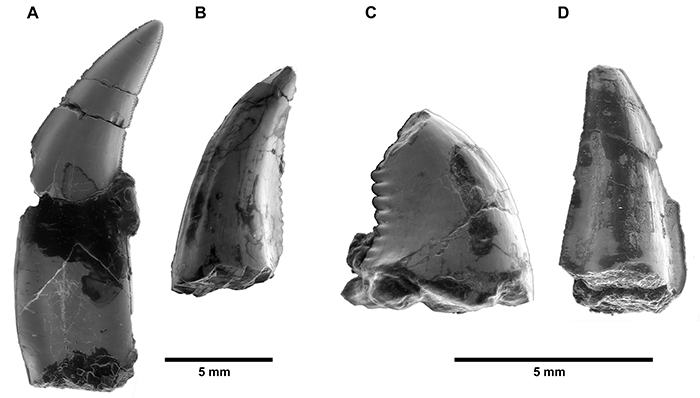 Teeth from Molí del Baró-1 studied in this article. A, Velociraptorine; B, Dromaeosaurine; C, Troodontid; D, Dromaeosaurid, possibly a microraptorine. Photographs taken using electron microscopy. All teeth are shown in lingual view. The two 5 mm scales highlight the size differences between some of the teeth, despite belonging to relatively small species. (Adapted from Castillo-Visa et al., 2025)
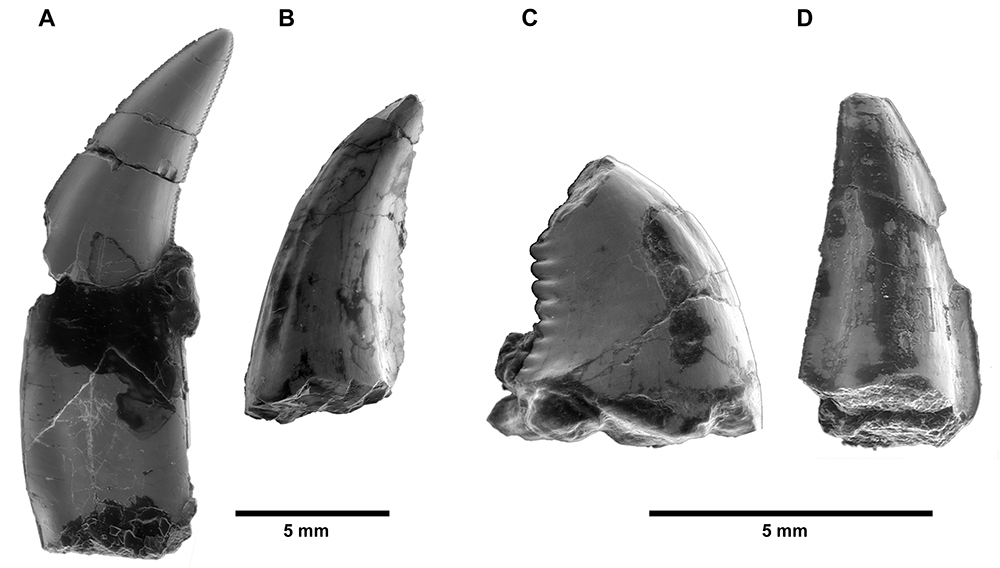
The fossils analyzed reveal the presence of at least three different groups of carnivorous dinosaurs in this area: velociraptorines, dromaeosaurines, and troodontids. Velociraptorines are a very diverse group, generally small in size, although some forms were larger (albeit far from the massive size imagined by Steven Spielberg in the well-known *Jurassic Park*). The features of the velociraptorine and dromaeosaurine teeth identified at the Catalan site suggest a carnivorous diet using a feeding mechanism known as “puncture and pull”, which involved biting and anchoring the teeth followed by a backward pull to tear off chunks of flesh. As for the troodontids (represented in Catalonia by the species Tamarro insperatus, described at Sant Romà d’Abella in 2021), their tooth characteristics suggest an omnivorous diet, with a high proportion of plant material, contrasting with the carnivorous diets of the other theropods.
In addition, researchers have identified a fourth type of carnivore corresponding to the smallest form found at the site, which may belong to a lineage thought to have gone extinct during the Maastrichtian and whose distribution was believed to be limited to present-day China.
“The presence of these dinosaur groups in the Ibero-Armorican region paints a rather different picture from what we know about other areas of the planet during this final stage of the Cretaceous,” explains Bernat Vila, researcher at ICP-CERCA and MCD and co-author of the study. Ibero-Armorica was a large ancient island that included parts of the Iberian Peninsula and southern France and, according to other studies, shows distinct characteristics in terms of dinosaur faunas compared to the rest of the world. But the study went even further; the analysis of wear marks on the fossil teeth has allowed researchers to infer the ecology of this region. “All dinosaurs at this site were small in size, but each occupied a different ecological niche, so we believe there was little competition among them,” says Vila. Despite belonging to closely related groups, they developed different diets and feeding mechanisms.
In addition to Oscar Castillo and Bernat Vila, the research team included Àngel Galobart (ICP-CERCA and MCD), and researchers Mattia Antonio Baiano from the University of Río Negro and CONICET (Argentina), and Stephen Brusatte from the University of Edinburgh (UK). The article is part of research carried out within the projects PID2020-119811GB-I00, funded by the Ministry of Science, Innovation and Universities, and ARQ001SOL-173-2022, from the Department of Culture of the Generalitat de Catalunya, with funding from the CERCA program.
The Dinosaurs of the Pyrenees, the Last in Europe
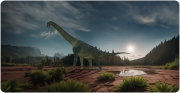
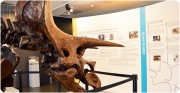
This research is yet another example of the exceptional fossil record of dinosaurs in Catalonia. The Pyrenean sites preserve the remains of the last dinosaurs that lived in Europe, just a few million or even thousands of years before their global extinction. The fossils they yield are a key resource for paleontologists and also an inexhaustible source of content for interpretation centers and local museums that showcase this unique paleontological heritage.
The interest in Pyrenean dinosaurs lies in the fact that they represent the last documented dinosaur groups in Europe, providing crucial information about ecosystems before the mass extinction at the end of the Cretaceous. Discoveries from the Pyrenean sites have led to the description of several new species for science, such as Pararhabdodon isonensis, Tamarro insperatus, and Abditosaurus kuehnei.
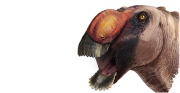
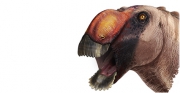
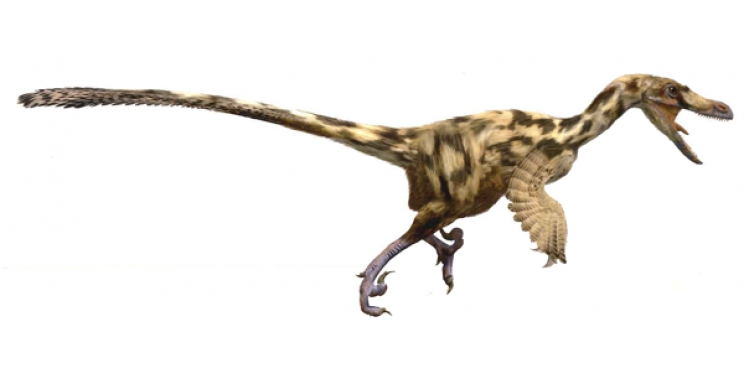
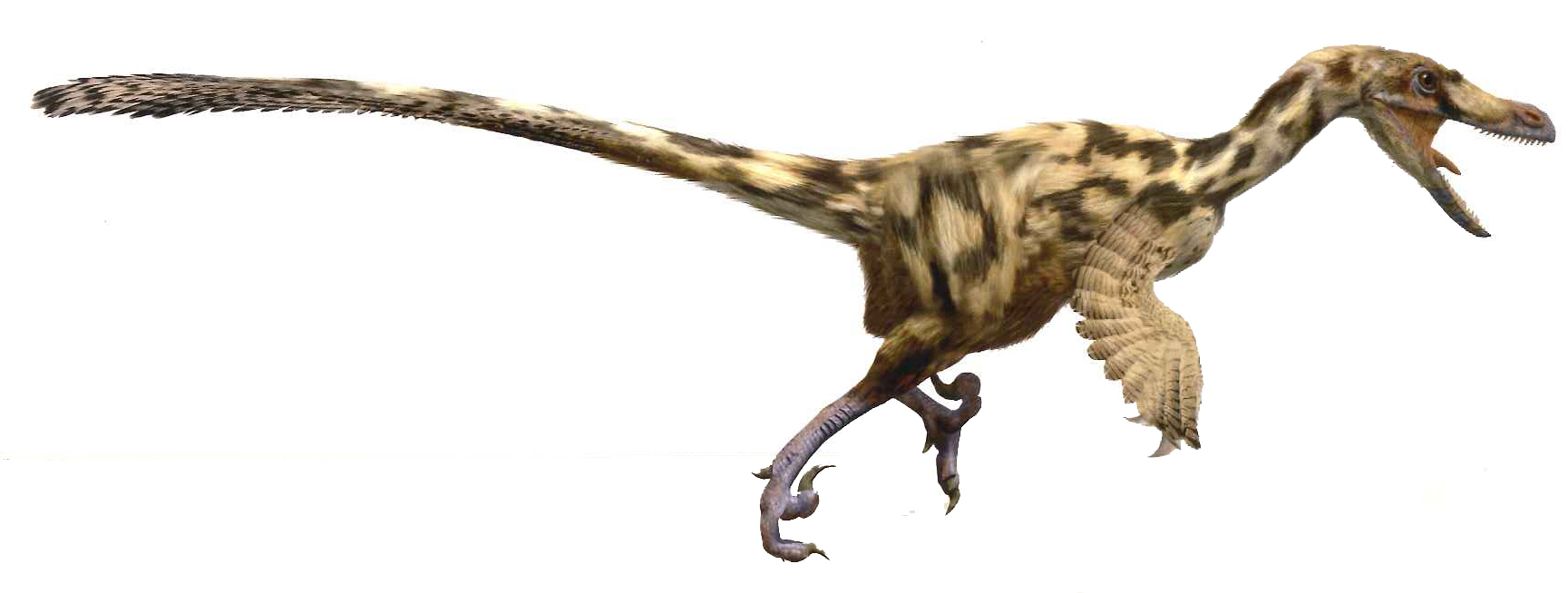
Main image: Reconstruction of a dromaeosaurid ("running lizard"). Oscar Sanisidro / Institut Català de Paleontologia Miquel Crusafont
Original article:
- Castillo-Visa, O., Baiano, M. A., Galobart, À., & Vila, B. (2025). The last non-avian theropods of Europe: Palaeoecology and Biogeography inferred from dental records from the uppermost Maastrichtian of Catalonia, Spain. Cretaceous Research, 176, 106199. https://doi.org/10.1016/j.cretres.2025.106199